

Every Worker Deserves Human Connection
2025 Impact Report
Letter from the CEO
Last year was defined by disruption for workers. Across 2025, workers faced broad scale hardships similar to past recessions and the pandemic. But unlike other disasters, there was no coordinated response to support the workforce. Headlines blared corporate restructuring, artificial intelligence, and uncertainty at the federal level, yet the reality felt by small businesses and low-income workers was a stagnant job market and the worst non-recession year for jobs since 2003. Long-term unemployment rose sharply in 2025, reaching 25.7% of all unemployed workers and unemployment remained elevated at 4.3%, similar to levels during the COVID-19 pandemic.
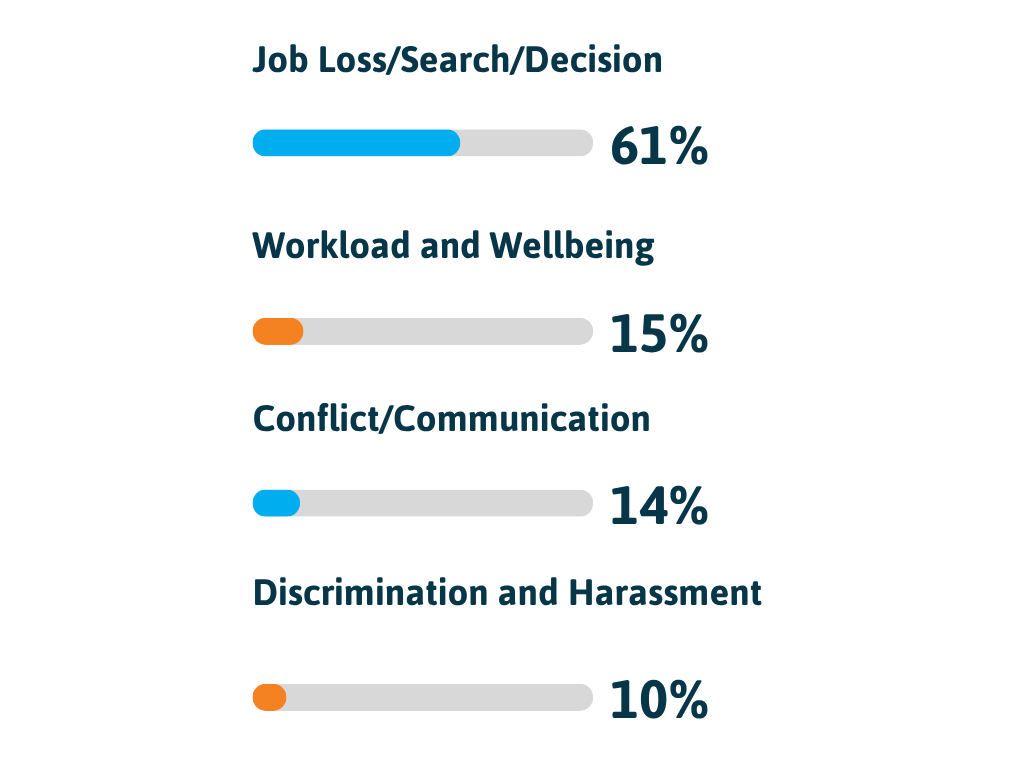
At Empower Work we saw a dramatic, unparalleled increase in help seekers facing job loss. In 2018, when we started, only 13% of text line conversations were related to job loss, soaring to 61% in 2025. For the people we serve, job loss is often complicated. It may look like losing a second job or having hours cut, making paying bills impossible yet safety net services lacking. For workers across the country, rising underemployment, long-term unemployment, and slow wage growth became everyday realities that they are left navigating alone. Uncertainty and fear of job loss dominated the peer counselor conversations at Empower Work last year. As one help seeker shared:

61% of conversations were about job loss in 2025
“[I’m] debating how quickly I need to start looking for a new job. I like my co-workers, but Friday was our second round of layoffs this calendar year.”
More workers than ever before came to us feeling stuck, isolated, and unsure of what to do next. We’ve seen for years the critical connection of economic mobility and emotional well-being - one cannot happen without the other. With the rapidly shifting landscape of technology, the economy, and work, people’s well-being is on the line.
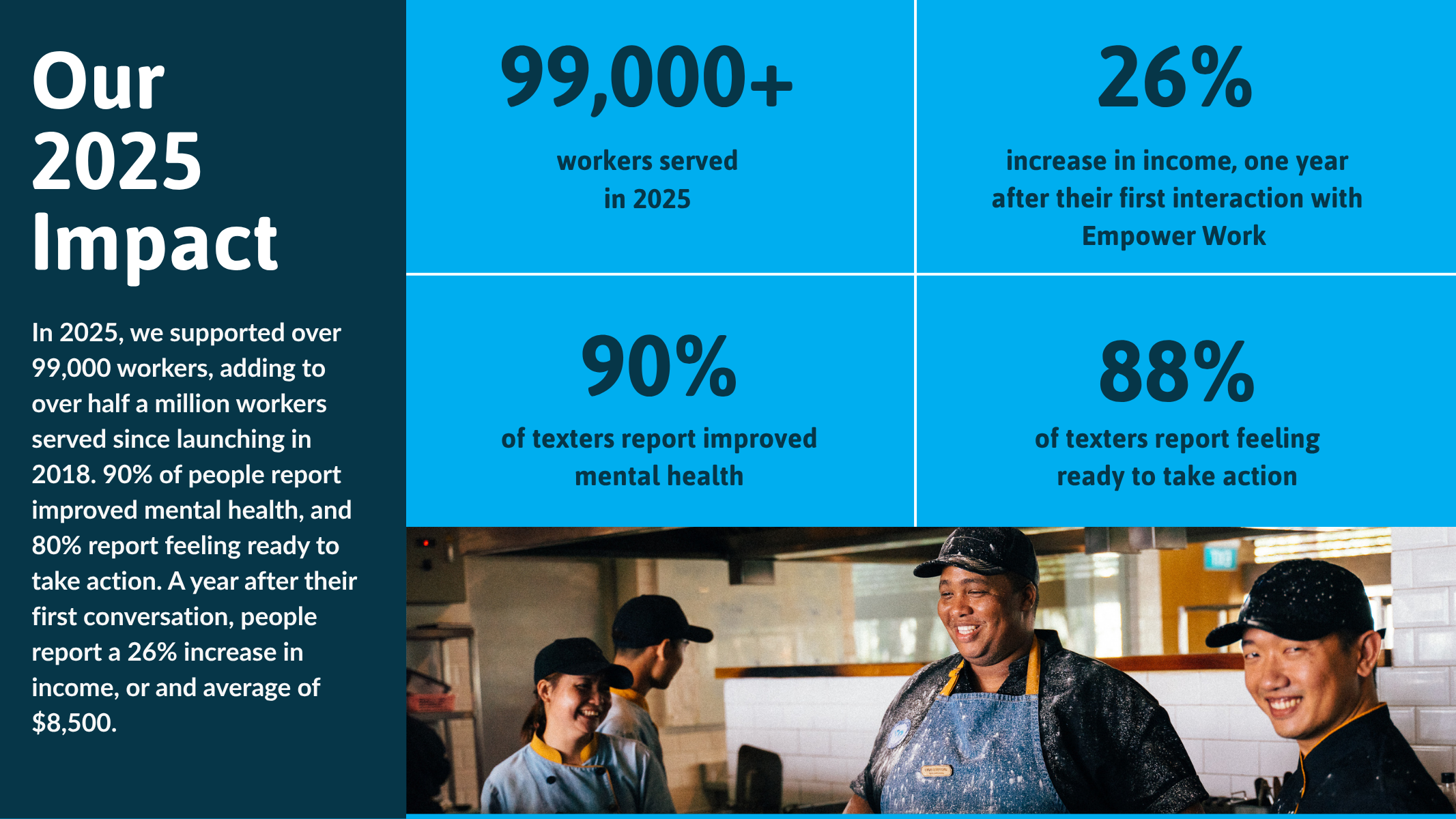
Since launching in 2018, Empower Work has served over half a million people with 90% reporting improved mental health and agency after a conversation with a peer counselor. In 2025, demand grew as more workers reached out in moments of urgency—when facing a work disruption or feeling overwhelmed and uncertain. People need immediate, accessible, human support—someone to listen, reflect, and help them move forward.
The need is growing. We rose to meet it.

90% of people report improved mental health and agency after a conversation
Last year for our team was about staying curious, learning faster in a dynamic economic and political environment, and putting learning into action quickly. Three key lessons are informing how we meet people where they are in 2026 and beyond:
Problem awareness is acute. Solution awareness is nearly nonexistent. For years we have heard from workers, “I wish I knew about Empower Work sooner” or “everyone should know this exists!” We realized in 2025 that we were missing an important piece of the puzzle. People are deeply aware of their career challenges, yet there is little to no expectation that any solutions exist to help. We are creating a new category of worker navigation support. That requires creating awareness and expectation that people deserve help figuring out what’s next and specific awareness about Empower Work.
Career navigation support must be nimble to the moment to best meet people’s needs. We have seen national circumstances that impact workers shift dramatically - from a 197% message volume increase in March 2020 with entirely new topics to 2025’s unprecedented job loss. We have learned to adjust services to people’s needs in real time. In 2025 this meant new resources, job search support, and service delivery. While a single critical conversation with a peer counselor might resolve a workplace conflict, someone facing long-term unemployment often needs more sustained support, with our data showing an average of three to four conversations making the most difference. We are also seeing workers with more acute financial distress. Economic conditions call for new service adjustments and we are exploring which ones have the most impact.
Workforce and community partnerships also need a context dependent approach. Building quality partnerships at scale means taking our situation-specific learnings into how we work with our partners. Just like Empower Work, each community partner is serving an individual person, with individual career needs. We learned we can be a more effective partner if we take that lens to both our services and the longitudinal outcome measurement of that partnership. We released our key learnings in a 2026 case study that you can read below and are building out new measurement structures in the coming year.
In our 2025 Impact Report, you’ll see how Empower Work is showing up for workers in real time, meeting the moment—and how, together, we’re building a future where no one has to navigate work or career challenges alone.
Onward,
Jaime-Alexis Fowler
Founder and CEO
About Empower Work
Empower Work is a national non-profit that envisions a world where everyone can thrive at work. When work actually works for people, every individual’s economic and emotional well-being increases. And there is a ripple effect: communities, companies, the economy, and our democracy, thrive.
We are on a mission to create healthy, equitable workplaces where people are valued, supported, and empowered in ways that support their economic mobility, emotional well-being, and career success.
Everyone deserves human connection as they navigate the pivots and pain points of their careers.
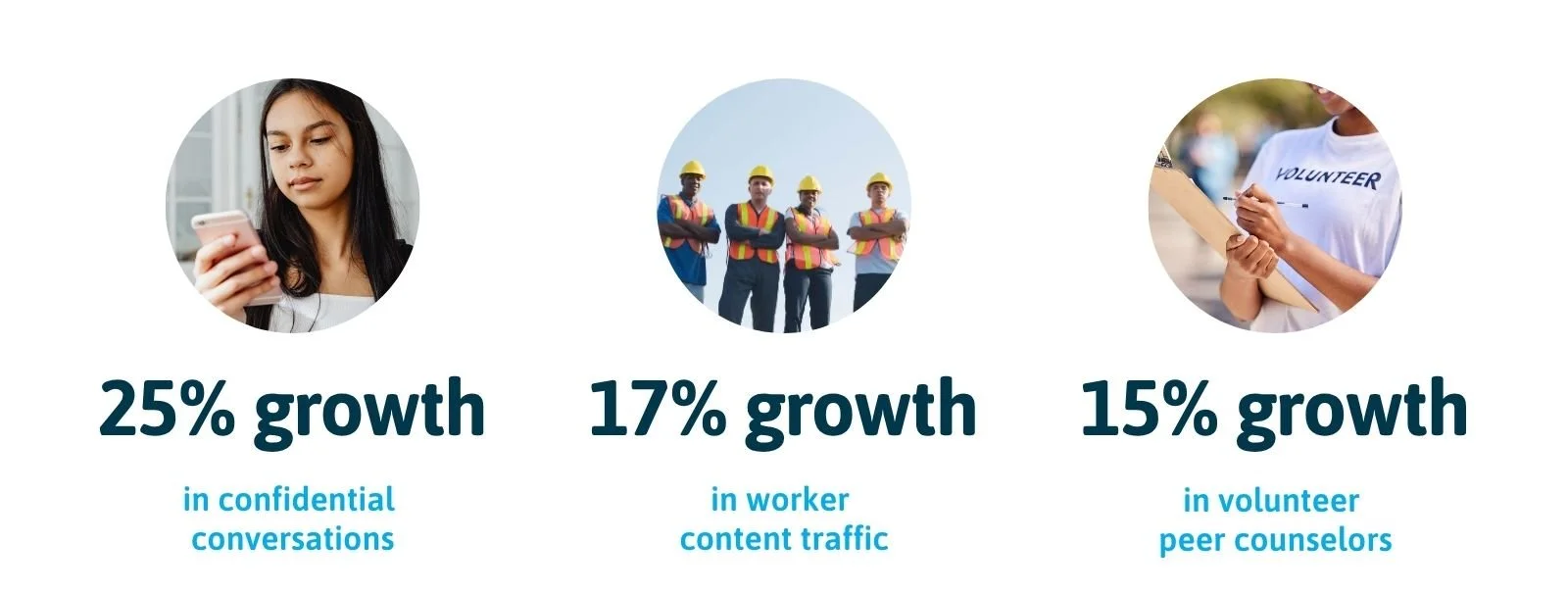
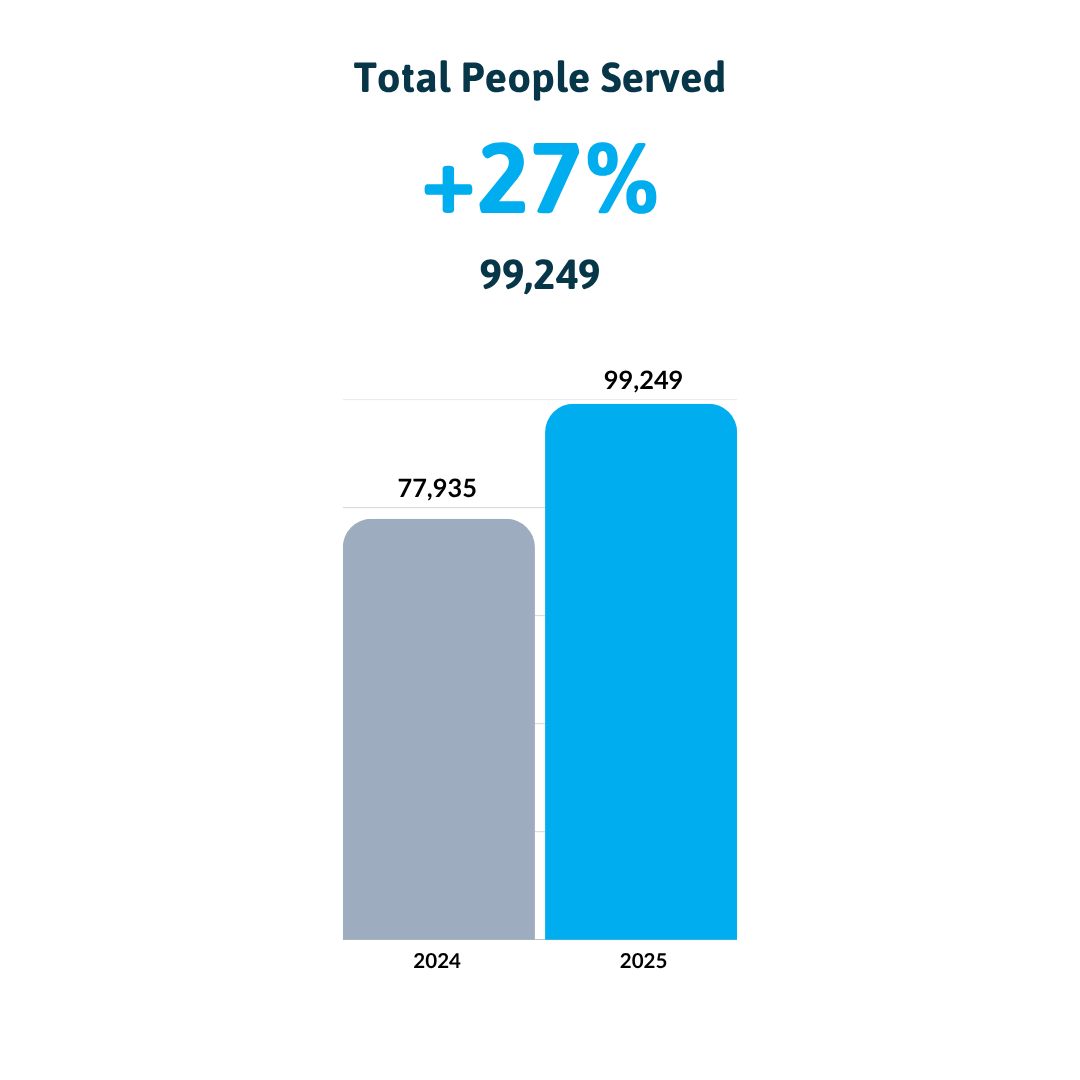
Year-Over-Year Scale
Help Seeker Stories
Hear from real help seekers who had a conversation on the text line and walked away feeling better and with an action plan.
Meet Dawn
Dawn was struggling with long-term unemployment for two years when she reached out to Empower Work for support. She is a caretaker, a mother, and now a CNA who found light at the end of the tunnel after a harrowing job search where she felt like she’d tried everything.
About a year after a conversation with Empower Work, Dawn shared this about her current employment status:
“I am classified as a CNA. I do not have a patient load, I work Monday through Friday, and I have the weekends off. It is a specific job that was created just for the person that I report to, and I believe it was divinely made just for me. I support two managers and a director of nursing, and I absolutely love it.”
Meet Yasmine.
After being promised a permanent role following a three-month contract, Yasmine’s position was unexpectedly cut. Through Connection Protection, our partnership with Visible, Yasmine reached out to the Empower Work text line for support.
Yasmine shared, “Speaking to that peer counselor gave me the confidence boost that I desperately needed at that time to reaffirm the abilities that I know that I have.”
Following her enrollment in Connection Protection and a conversation with an Empower Work peer counselor, Yasmine landed her dream role.
Who We Support
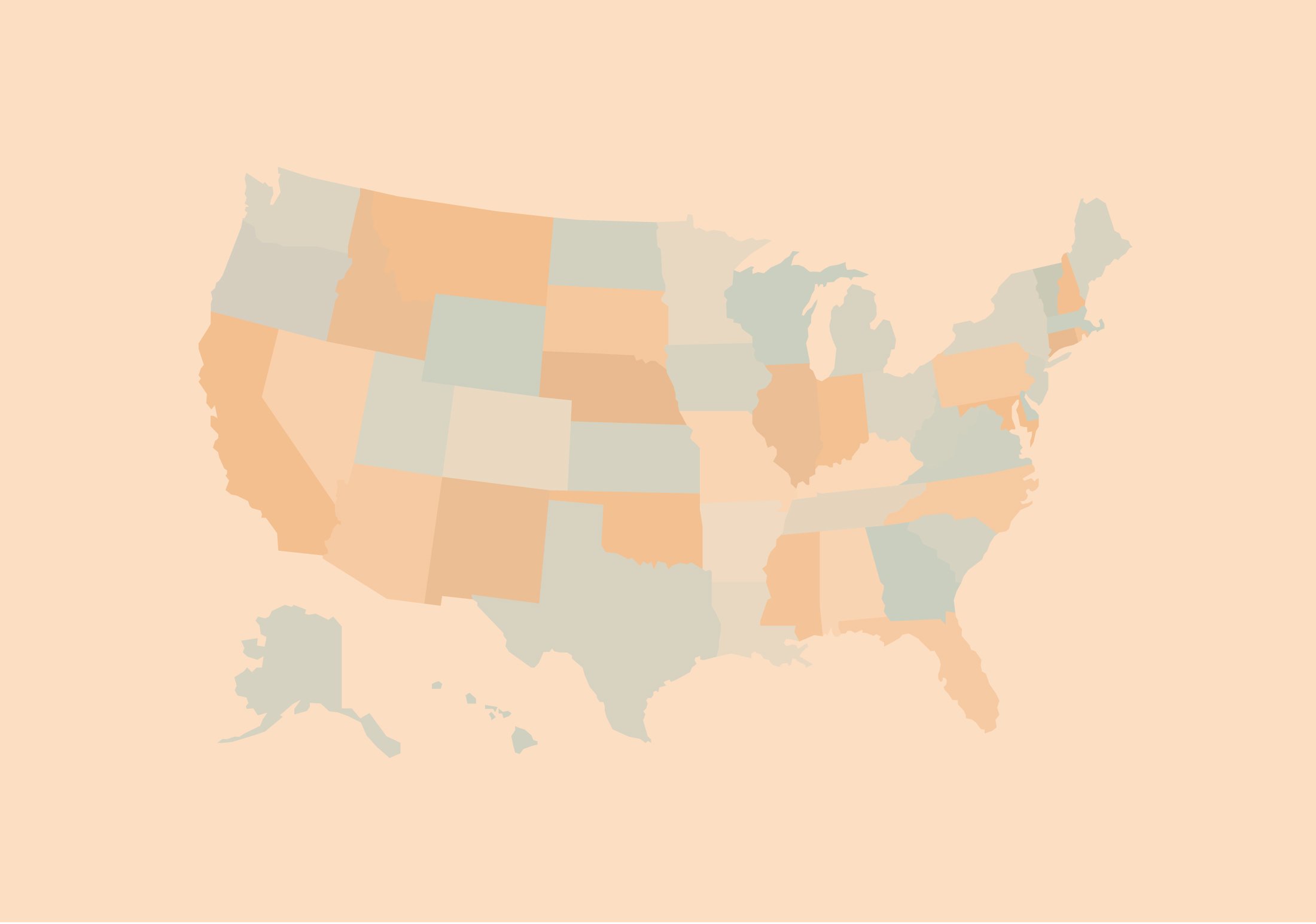
We help workers across every part of the U.S. — from rural communities to major cities. Those we support often feel isolated or vulnerable. The majority of workers across the country are employed at businesses or organizations with fewer than 50 employees. We ask for demographic information in post-use surveys to ensure the people we’re reaching match the communities that need the most help.

63% identify as a woman

14% Identify as LGBTQ+

62% identify as a person of color

Top Industries: Healthcare and Social Services, Education, Non-Profit, Government
Our Key Outcomes
Economic Security: One year after their first interaction with Empower Work, help seekers report a 26% increase in income, or nearly $8,500 on average.
Emotional Well-Being: 90% of people report improved mental health after a conversation with a peer counselor.
How We Fuel Change
Direct Service
How we help workers
We offer direct-to-worker support at every point in a person's journey, combining the irreplaceable power of human connection with technology built to meet people where they are:
Our free, confidential text and web chat line connects workers in real time with a trained human peer counselor.
Our career navigation resources deliver specialized, self-serve digital content built for lower-income, non-white-collar, and small-business workers, a population overlooked by a career-resources market built almost entirely for knowledge professionals.
Programs like Connection Protection pairs our expertise with Visible to keep workers connected to phone service after job loss. And Total Spark brings together local stores, local workforce organizations, and Empower Work to build community hubs and events for working students.
Training and Community Delivery
How we are training people to affect change
We improve workplace skills, practices, and education through our training platform for both volunteers who power the text line and community partners. Our unique training transforms outcomes for workers both through our direct service and through the ripple effect of newly learned and well-practiced skills entering workplaces and communities.
Policy and Practice Change
How we affect the system
Our longer-term vision: changing the cultural expectation of what worker support should look like, so people have support at every moment of their career when they need it. We bring together the data, research, and stories from our direct service and community partnerships to inform new approaches to workplace and workforce policy. The goal: workers experiencing a disruption should have a recognized place to turn that will help them navigate reliable reputable supports.
Direct Service
The Text Line: 2025 Worker Trends
In 2025, one topic dominated the world of work and conversations on our text line: job loss and job search. Six in ten conversations centered on workers navigating unemployment, fear of losing their job, or decisions tied to an ongoing search, and that share held steady across every month of the year. This wasn’t a spike tied to a single news cycle: it was the baseline reality for help seekers.
More than a third of job search conversations referenced financial strain directly: rent, bills, debt, the math of making it to the next paycheck. Roughly one in four carried the language of acute stress: feeling overwhelmed, anxious, panicked, burnt out. For many of the people who reached out, losing a job wasn’t a career problem. It was financial and emotional distress that rocked their lives and those of their families.
Top conversations on the line
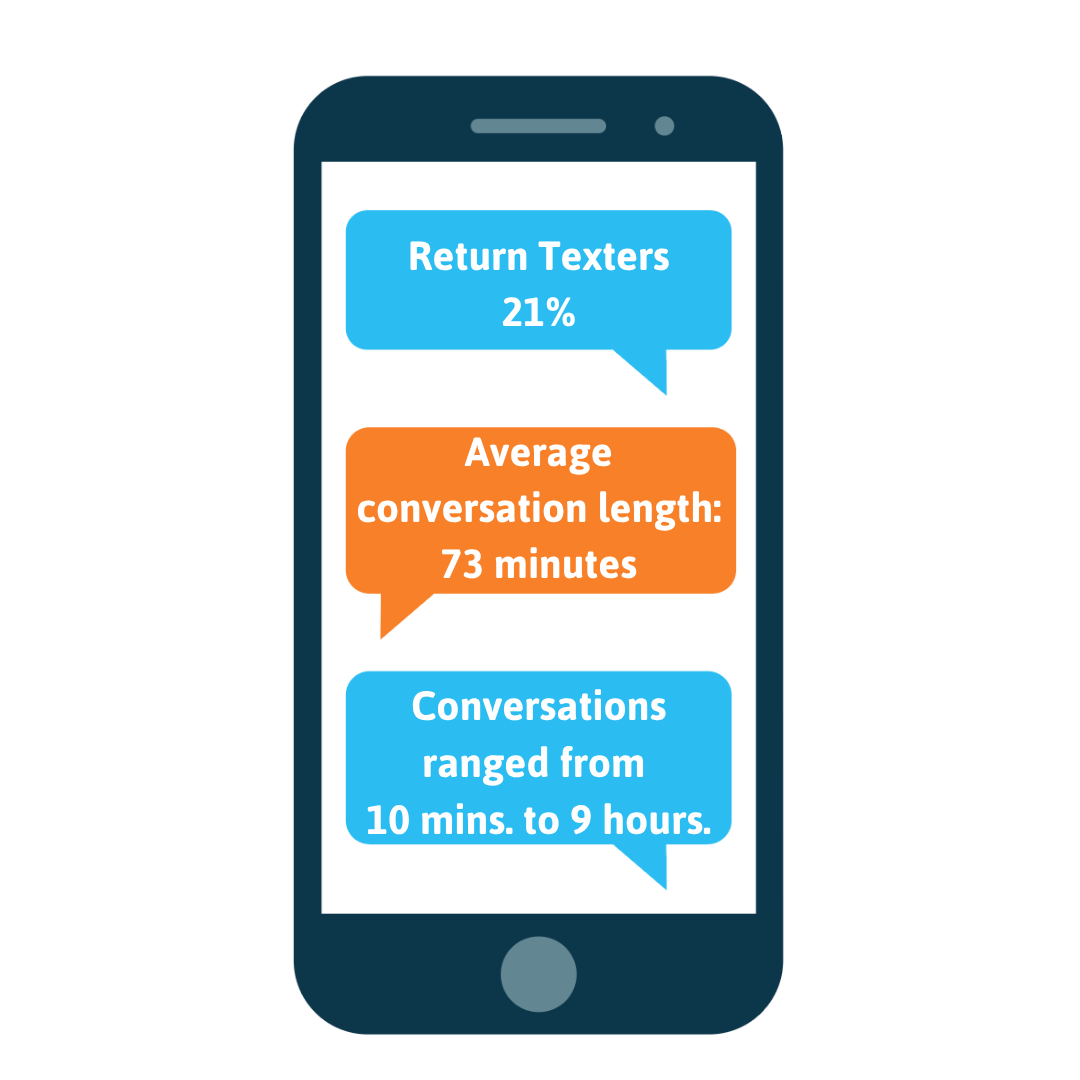
Text line metrics
Building Infrastructure
When someone loses a job, the support available to them is hard to find. There's no single, trusted place a worker can turn to at every point of a disruption, and that gap costs people time, money, and stability they can't get back.
Empower Work is building a suite of infrastructure programs to close that gap. Each program is a building block toward something bigger: a recognized, expected source of support for anyone navigating a work disruption, as available and trusted as a public library. Connection Protection is one example of this kind of resource:
Connection Protection
Connection Protection, our partnership with Visible, continued to demonstrate how practical support and human connection can improve outcomes during periods of job loss. By combining three months of no-cost wireless service with confidential peer counseling, the program helps people stay connected to employers, resources, and opportunities when they need it most.
Key takeaways since launching in 2023:
17,000+ workers supported through the Connection Protection program since launch.
68% used their phone to search or apply for job opportunities.
7 in 10 participants said it helped them stay connected with potential employers.
1 in 5 participants started a new job within 3 months.
1 in 3 participants received a job offer within 3 months.
Human-Centered Content
We believe every worker should have what they need at their fingertips at the moment they need it. A large part of that work happens through digital content built for lower-income, working-class, and under-supported workers, who are largely overlooked by a career navigation market built almost entirely for college-educated knowledge professionals.
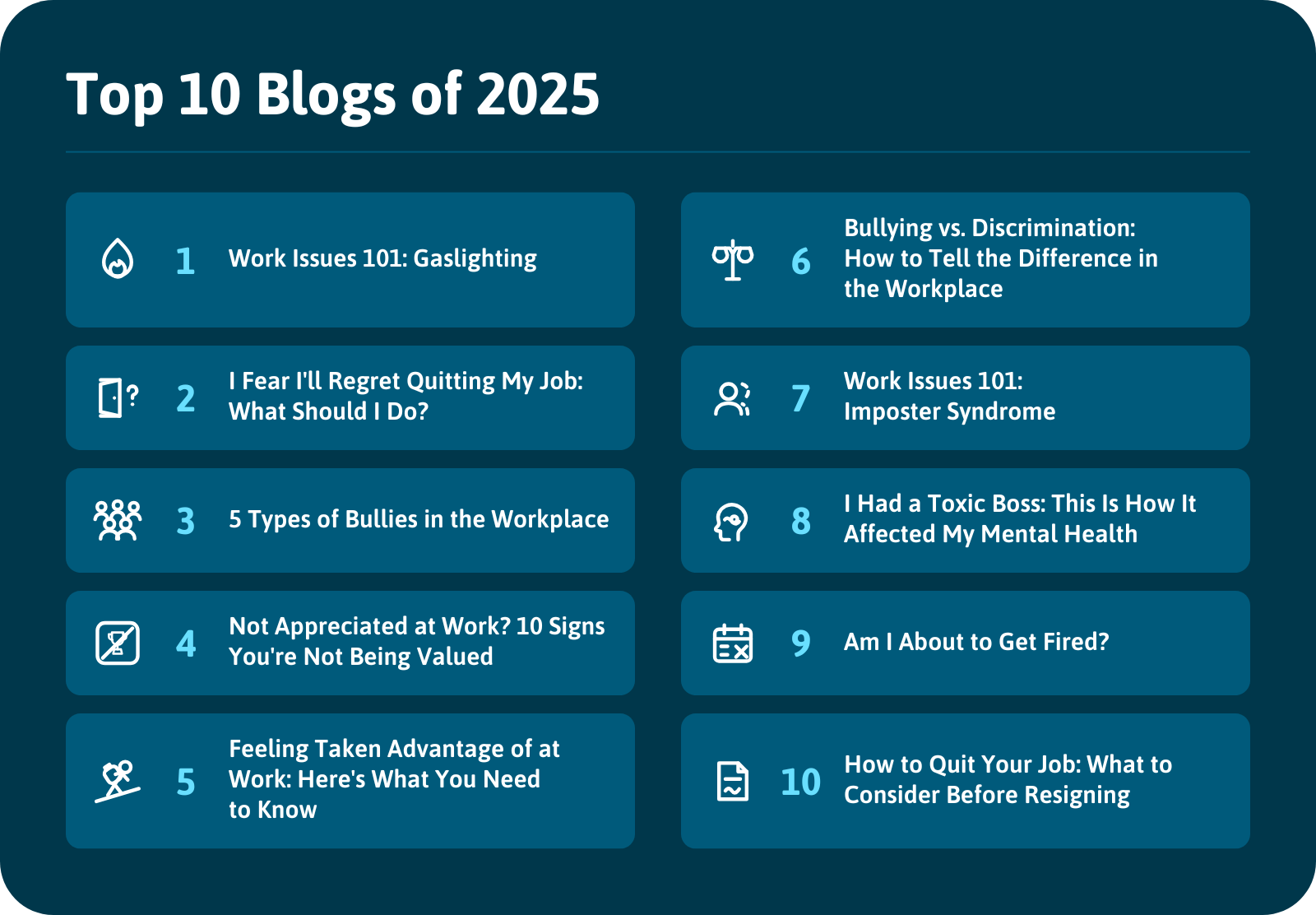
Readers most frequently turned to Empower Work for help understanding harmful workplace dynamics and difficult career decisions. Our most-read articles addressed gaslighting, job resignation concerns, workplace bullying, feeling undervalued, and exploitation at work. And we measure the impact. 46% of people reported feeling likely to take action towards improving your work situation.
As one reader who also reached out to the text line reported:
“I entered this, feeling like I was floundering. I found help, insight, actionable steps, and most importantly, kindness and understanding. I did not expect much, when I typed in ‘should I quit my job?’ into the google search bar. I thought perhaps advice from an abandoned employment blog from 2011. What I found was empathy.”
Check out more of our career resources here.
Training and Community Delivery
Volunteer Peer Counselors: The Other Side Of The Text Line
Training volunteers isn't incidental to how we scale, it's core to our theory of change. Work should work for people. That takes human connection, and volunteer peer counselors are how we provide it at scale. Our training is based in core coaching areas including establishing trust, active listening, powerful questioning, and forward momentum.
Our volunteers bring connection through experience (people who've faced their own version of a tough work situation) and connection across differences (meeting someone whose circumstances look nothing like their own). People who volunteer their time to help others while sharpening their professional skills—making them better leaders, self-advocates, team members, and managers in their own workplaces.
The result is impact on more than one level: help-seekers get support from someone trained to help them find their next step, whatever their situation, and volunteers walk away from every shift having practiced skills that matter well beyond the text line.
What we saw in 2025:
65 new volunteers trained and promoted to the line.
148 active volunteers
4,759 hours contributed to the line
Top volunteer contribution: 266 hours
Average # of hours volunteers contribute to the line: 32 hours
In their own words after training, volunteers describe two changes, a new way of helping people find answers and gaining skills they learned can be applied beyond the text line, with friends and family and in their workplaces.
The shift at the heart of our training
Training changes how volunteers show up, on the line and off it. More than half of the volunteers who completed training in 2025 named the same turning point: letting go of the urge to give advice and instead helping people find their own solutions. It is the same shift help seekers feel on the line with mental health and agency after a conversation.
“I think the most valuable thing I’ve learned is that you don’t have to have the answers to be helpful — just being there, really listening, and asking thoughtful questions can create a huge shift for someone. I used to think support meant giving advice or solutions, but now I see how empowering it is to help someone find their own voice and path forward. That mindset shift is something I’ll carry with me far beyond just the line.”
“It was eye-opening for me to see that there is a standard, proven method for how I can help coach people in difficult situations. I’ve learned that I am more effective taking a pause, and allowing help seekers to come up with their own solutions (as opposed to me just providing advice). I expect to use my coaching skills and approach in other areas of my life!”
“One of the most powerful ways I’ve applied what I learned from Empower Work is in how I support others — both personally and professionally. Instead of rushing to solve problems, I focus on deep listening and asking thoughtful questions that help people reflect. It’s changed my relationships. People feel more seen, and I’ve learned that being present is often more impactful than offering solutions.”
How training goes beyond the text line:
Volunteers put these skills to work right away. More than half describe a specific way they had already used the training. Nearly half brought it home to family and friends. More than a quarter brought it to work, including HR professionals, people managers, and team leads who now use the approach with their colleagues.
“I work in human resources and was immediately able to put into practice some of the conversation skills I learned during my training. I have also made an effort not to offer my own advice but rather to help a coworker find their own solution.”
“My brother is struggling with a job search. Instead of trying to give him the answers, I’m empowering him to find the solutions on his own!”
“Through...asking open-ended questions at work, I am able to [help] people come up with solutions, making them feel empowered and in control of their difficult situation.”
Volunteer Stories

Meet Daniela
Daniela volunteered with Empower Work for two years with 123 hours on the text line. She shared “I remember it was New Year’s Eve when I was looking for volunteering opportunities. I’d volunteered with many organizations before, but only a few felt like they were truly making a difference in people’s lives. When I saw Empower Work, it felt like magic.” Learn more about Daniela’s story.

Meet Abby
Abby has volunteered with Empower Work for 2 years with over 400 hours on the text line. After going through a few rounds of layoffs and being laid off herself, she wanted to spend her time in a way she was passionate about. She was searching for organizations that provided the knowledge to deal with toxic workplaces and micromanagement, and that’s how she came across Empower Work. Learn more about Abby’s story.
Bringing Human Connection to More Communities
Empower Work’s Partnerships
Worker support should not be scattered across disconnected programs, but a recognized part of the systems people already navigate: workforce boards, libraries, community organizations, and employers. Partnerships are how we get there. Partners extend Empower Work's reach into the communities where workers already are. These relationships let us combine our career navigation supports with resources and trust that already exist on the ground.
In 2025, we deepened this work not just to grow our numbers, but to test what a lasting network of worker support could look like through programs like, and a learning partnership with five workforce development nonprofits.
Partner Highlight: Verizon Value
“Verizon Value has had a very impactful partnership with Empower Work for several years, beginning with the successful launch of Visible’s Connection Protection, which supports members experiencing job loss by providing three months of free service, covered by Visible.
When it came time to find local partners for Total Spark, we relied on Empower Work’s expertise and knowledge to help us identify our five nonprofits. Each of the nonprofits we’re now working with for Total Spark already provided valuable resources and community support to working students in their communities and we are proud to be working with them to expand the reach of those programs.”
-Nancy Clark, SVP and President of the Verizon Value

Testing Navigational Career Support with Workforce Partners
In 2025, we launched deep partnership work with five workforce development organizations to test and learn what effective worker support looks like across the workforce development ecosystem.
This was an incredible opportunity to work with best in class workforce organizations.
We started by focusing on alumni support, offering help to people after they'd completed each program. But engagement suffered: too much time had passed since they were active in the program. So we shifted, embedding support throughout the entire journey, at every step. That single change drove adoption up.
We found that workers’ mental well-being and their economic outcomes were inextricably linked and could be positively influenced with full-journey support. When people experiencing difficulties in their program received support from a peer counselor, they walked away with the clarity required to overcome those challenges. In fact, help-seekers that reached out in as a part of our partnership reported an 85% improvement in their mental state after one conversation, and 47% increase in income in the first year.
Our partner Skill Up saw similar patterns in their own research – people in their program who utilized our text-based support averaged an $11,142 increase in annual income after one year. 92% of users reported the support they received provided clarity and confidence, making it more likely they will take immediate action to improve their specific challenge.
“..I felt like quitting as it’s overwhelming. I can’t quit my job as I have bills and dont want to quit as I want to advance to a different opportunity.” → →
→ → “I know I can finish it, I just need to get through other things slowly…I appreciate you taking your time to talk with me. It really helps. It really helps.”
“One of the clearest insights from our data is that SkillUp users are 4x more likely to engage with Empower Work than with live Zoom coaching. This underscores an important shift in user behavior: workers are increasingly looking for support that is convenient, personalized, and available in the moments they need it most. Rather than replacing traditional coaching, text-based support expands access by lowering the barriers to getting help, making it easier for workers to access career and life support.”
This work was made possible by the Truist Foundation, GitLab Foundation, and the five workforce organizations testing alongside us: Memorial Assistance Ministries (MAM Houston), NPower, Per Scholas, SkillUp Coalition, and Year Up United. If you’d like a deeper dive into these learnings, read the case study: Lessons From Testing Navigational Career Support with Workforce Partners
Workforce Partners


Our Supporters


Scaling Human Empathy
A Case Study on Empower Work’s AI Assistant for Peer Counselors
As more workers turned to Empower Work for support, we asked an important question: How can AI help us reach more people without replacing the human connection that makes our service so effective?
Empathy is the backbone of our service, and any AI tool we built would need to provide equivalent or improved support. There are three recognized types of empathy:
Cognitive empathy, the ability to accurately recognize what someone else is feeling;
Affective empathy, the ability to genuinely feel with someone in that emotional state; and
Motivational empathy, a level of concern strong enough to compel real effort to help.
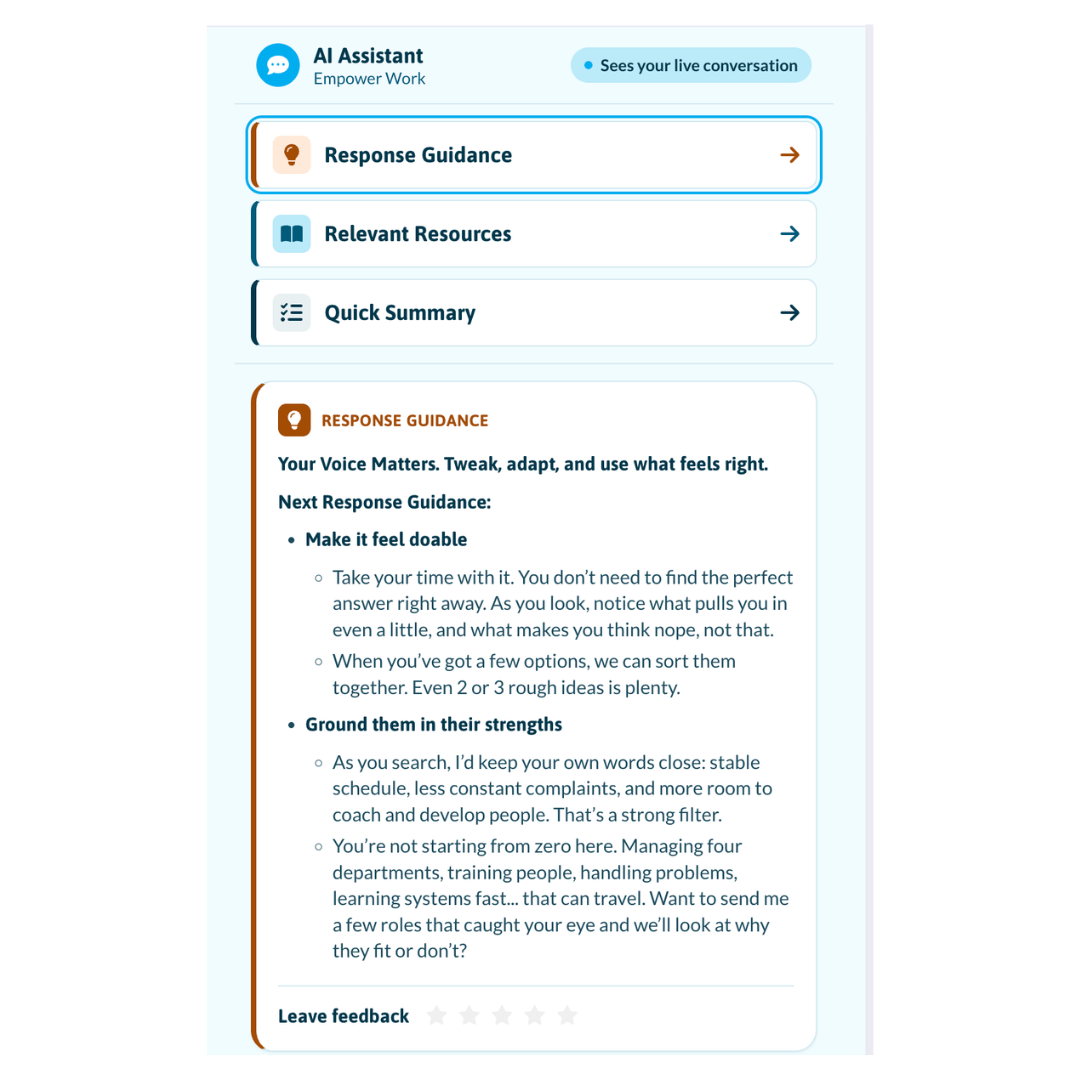
AI systems can demonstrate cognitive empathy, but they fall short on affective and motivational empathy. This distinction matched what we saw in our own research: help seekers consistently preferred human support for emotionally complex work issues, and human responses produced stronger outcomes than AI responses even when people knew they were talking to an AI. That finding shaped a key design decision: rather than build an AI tool for help seekers, we built one to support the humans already providing that care: our peer counselors.
Working alongside an AI Advisory Council of volunteer peer counselors, we developed an AI Assistant that provides real-time response guidance, surfaces relevant resources, and automates administrative tasks like session summaries. Every suggestion is reviewed and personalized by a human counselor before it's shared.
Six months after launch:
65% of active peer counselors are using the AI Assistant during shifts.
93% say it is helpful, with 70% rating it as very to extremely helpful.
Counselors are now able to support nearly three simultaneous conversations on average, compared with about two before.
Administrative tasks are significantly faster, with resource sharing, session summaries, and shift handoffs taking 40–60% less time.
As peer counselor Cyn put it: "It's like having an extra set of eyes watching the road, yet I am still driving."
In 2026, we're piloting a feature that lets the AI Assistant reflect a counselor's own session back to them — what went well, what to try next time. We're also testing follow-up support for help seekers that provides AI-generated summary, key takeaways, resources and next steps after their peer counseling sessions. This is in response to feedback we've been hearing from help seekers for years that they would like recaps of their sessions. The commitment stays the same: use AI to scale the human core of Empower Work, not replace it.
2026 and Beyond
We envision a world where everyone can thrive at work. When work actually works for people, individual economic and emotional well-being increases, with a ripple effect across families, communities, companies, and the economy. We see 2026 as a defining moment: an impending workforce cliff driven by growing economic and political uncertainty combined with the disruption of generative AI, which could lead to 100 million "economic refugees."

Our strategy to scale will take us from 560,000 people served to 3.5 million by 2030. Our impact model rests on three pillars: direct service, including specialized digital content and our free, confidential national text line; training and community delivery, improving workplace skills and practices for our volunteers and community partners; and policy and practice change, using data and stories from our direct service to inform systemic change. We're clear about what workers need and what current systems fail to provide: support that is accessible, trusted, holistic, deeply informed, and empowering. HR isn't highly trusted, career counselors are often cost prohibitive, friends and family may lack relevant expertise, mental health services often don't address workplace specific challenges, and government resources function as a last resort for too many workers.
Based on our current impact, we project 90% of those we support will have sustained, improved mental health a year after support and 80%+ will have improved economic security including a 25% income gain. Altogether that could be an aggregate income gain of $31.5 billion for workers, families, and communities.
Supporting 3.5 million Americans by 2030 requires $35.5M over five years and we're seeking $10M in catalytic investment in 2026 to launch our scaling strategy.
This is what it means to move from 560,000 people served to 3.5 million: 3.5 million fewer moments where someone navigates a layoff, a hostile workplace, or a stalled job search alone. It's $31.5 billion put into workers, their families, and their communities, money that pays rent, keeps kids fed, and builds toward something more stable. We built Empower Work because work should be a source of dignity. And that fuels thriving communities. Every person we reach, every partner we work with, every new policy or practice that aligns with our mission, gets us closer to a world where that's true for everyone.
How You Can Help
As we continue paving the path for better workplaces - ensuring people don't just make it to a good job opportunity but are flourishing in their working journey, you can help. Here's how:
Donate to make a difference in the lives of workers. Your donation goes to work right away. We live our values inside and outside of the organization—everything we do is focused on helping workers, including our funding. Empower Work also accepts stock donations via Every.org at no cost to the organization. Donate stock today.
Partner with us. Bring Empower Work’s unique text line support to your organization, affinity group, or local community and help your people navigate difficult work moments. We offer extended support, scalable resources, and insights for your community.
Volunteer with us. Interested in developing your professional skills while making a difference? Sign up to become a volunteer peer counselor at Empower Work.
How We Use Our Funds
Empower Work is a platinum-level organization on GuideStar with a four-star rating on Charity Navigator, demonstrating our commitment to transparency. Check out our financial history here.


Thank You
To every volunteer who powered the text line, every donor who invested in the lives and well-being of workers, every partner who helped us grow and extend our support, and every person who reached out to our line—you are the reason this community is where it is today.
Because of you, Empower Work is a trusted space where people feel heard, valued, and equipped to take the next step. Together, we’re transforming the world of work and helping people get the support they deserve.

The challenges that workers face every day aren’t slowing down, and neither are we.
As we move through 2026 and beyond, we're seeing continued demand for the kind of human support that has always been at the heart of Empower Work. Economic uncertainty, rapid technological change, and an evolving workforce are creating new pressures for workers across the nation. More people are navigating layoffs, career transitions, workplace instability, and questions about what comes next.
We’re strengthening our programs and partnerships, adding capacity on our team to meet the needs, and investing in technology that will allow us to support more workers without losing the human connection that defines our core mission. Every improvement we make is to help us serve more people with the empathetic and real-time support they deserve.
The need is growing, and we are meeting it.
Together with our volunteers, partners, funders, and supporters, we're building a future where every worker can access the support they need to navigate work with confidence, agency, and empowerment.

Curious to learn more or get involved in other ways? Email us: team@empowerwork.org.
Read our 2024 Impact Report*